Choosing between DDP, FOB and CIF settles three questions: who pays for freight, insurance, duty and clearance, where risk passes, and who is the importer. The last one decides which document you deduct VAT from. We compare FOB Yantian, CIF Gdańsk and DDP to your door, the three terms on which we ship goods from China.
What are the Incoterms 2020 rules?
Incoterms 2020 are eleven three-letter rules published by the International Chamber of Commerce (ICC) that split costs, risk and formalities between the parties to a B2B sale. They have applied since 1 January 2020. The rules do not set duty rates or customs procedures, only who is responsible for them.
Every rule is used with a named place, for example FOB Yantian or CIF Gdańsk. The ICC lists all costs for each rule in articles A9 and B9, so the seller's and buyer's charges appear in one place.
What does FOB Yantian mean?
FOB (Free On Board) means the seller delivers the goods on board the vessel at the port of loading, and risk passes to you there. The seller clears the goods for export. You arrange and pay for freight, insurance, import clearance, duty, VAT and transport to your warehouse.
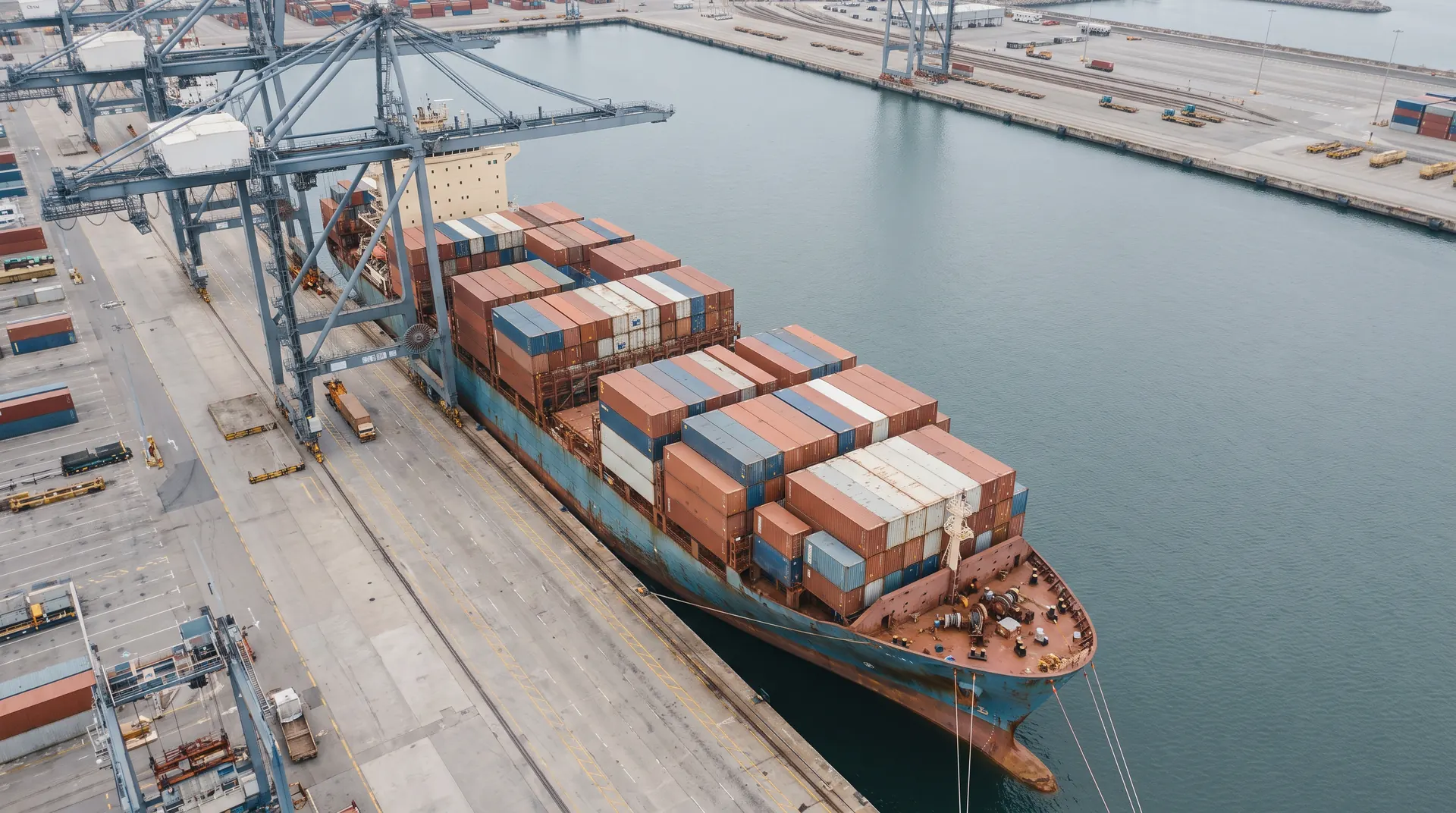
In practice, FOB Yantian means we load the goods onto the vessel at the port of Yantian (CNYTN). From loading onwards the cargo travels at your risk and your cost. According to ICC Academy, FOB is for sea or inland waterway transport only, port to port.
What does CIF Gdańsk mean?
CIF (Cost, Insurance and Freight) means the seller pays freight and insurance to the port of destination. Risk, however, passes to you at the port of loading, once the goods are on board. You pay for import clearance, duty, VAT and transport from the port to your warehouse.
CIF Gdańsk means we pay freight and insurance to the port of Gdańsk (PLGDN). Under the C rules the place of delivery and the place of destination are two different points. Risk therefore does not pass at the destination port (ICC Academy).
CIF insurance is minimum cover by default, under the Institute Cargo Clauses (C). Wider cover, such as clauses (A), has to be agreed in the contract (ICC). A loss under that policy is claimed directly from the insurer.
What does DDP mean?
DDP (Delivered Duty Paid) means the seller delivers the goods to a named address, cleared for import, with duty and taxes paid. Risk passes to you when the goods are at your address, ready for unloading. Only the unloading stays with you.
With DDP you get one price from us for goods delivered to your door in Poland or the EU. Duty and clearance are on our side (DDP from China). According to the ICC guidance note on tariffs, DDP is the only Incoterms rule under which the seller pays the duty.
ICC Academy adds that a DDP seller is not obliged to insure the cargo but bears the risk all the way to the place of delivery.
Who pays for what under FOB, CIF and DDP?
The key difference is duty and import VAT: under FOB and CIF you pay them as the importer, under DDP the seller does. You pay ocean freight only under FOB. Risk passes at Yantian under FOB and CIF, and only at your address under DDP.
| Who pays or is responsible | FOB Yantian | CIF Gdańsk | DDP to the door |
|---|---|---|---|
| Loading on board at Yantian | seller | seller | seller |
| Export clearance in China | seller | seller | seller |
| Ocean freight Yantian → Gdańsk | buyer | seller | seller |
| Cargo insurance | buyer's decision | seller, minimum clauses (C) | no obligation, risk with the seller |
| Risk transfer | on board at Yantian | on board at Yantian | at the buyer's address |
| Import clearance in Poland | buyer | buyer | seller |
| Duty | buyer | buyer | seller |
| Import VAT | buyer | buyer | seller |
| Transport from port to door | buyer | buyer | seller |
| Unloading at the consignee | buyer | buyer | buyer |
The table follows the ICC rules. Write the rule into the contract with the place and the version, for example "FOB Yantian, Incoterms 2020".
Who is the importer, and what does it change for VAT?
Under FOB and CIF you are the importer, so you deduct import VAT from the customs document. Under DDP the seller is the importer: it pays VAT at import, and its onward supply to you is taxed in Poland. You then account for VAT on the basis of the seller's invoice.
The basis is the Polish VAT Act:
- the taxpayer for import is the person liable to pay the customs duty (article 17(1)(1)),
- on import, input VAT is the amount shown in the customs document received (article 86(2)(2)),
- a supply of goods dispatched from a third country by a seller who is also the taxpayer for the import is treated as made in the country of import (article 22(4)).
Under FOB and CIF you have two routes: you can pay import VAT at clearance and deduct it in your VAT return. As an active VAT payer you can also account for it in the return without paying at clearance (article 33a). One condition is that a direct or indirect representative lodges the customs declaration.
Under DDP, VAT is part of the invoiced price. Before you sign, ask who appears as the importer on the customs declaration and what invoice you will receive. The standard VAT rate is 23% (article 146ef(1)(1)).
Which term should you choose?
Choose FOB when you have your own forwarder, a customs agent and repeat volume. CIF works when you want the seller to book the freight but keep clearance yourself. Choose DDP for a first import, smaller orders, or when you want the full cost fixed in advance.
- FOB Yantian gives you control of freight and sight of every cost line. You pick the carrier and arrange shipping from China to Poland.
- CIF Gdańsk takes freight booking off your hands, but risk still passes at Yantian. Check the policy, because the minimum is clauses (C).
- DDP moves duty, clearance and risk to the seller all the way to your door. You pay one price and need no customs agent of your own.
Under FOB and CIF you need customs clearance in Poland. The customs team within our group handles that part, so you can hand it to us even when you arrange the freight yourself.
For zero-duty goods, such as wooden console tables under subheading 9403 60, the terms differ only in freight, risk and VAT. For goods with a positive rate there is also the question of who finances the duty.
ICC Academy points out that for containers and multimodal transport FCA and CIP are the better-suited rules. FOB and CIF fit mainly cargo moved port to port. If you buy by the container, state in the contract exactly where and when risk passes.
Legal position verified: September 2026.